- Location
- Carabao Island, San Jose, Romblon, Philippines
- Project period
- 2026
- Services
- Meta Ads (Facebook)Meta Ads (Instagram)Meta Organic Posts
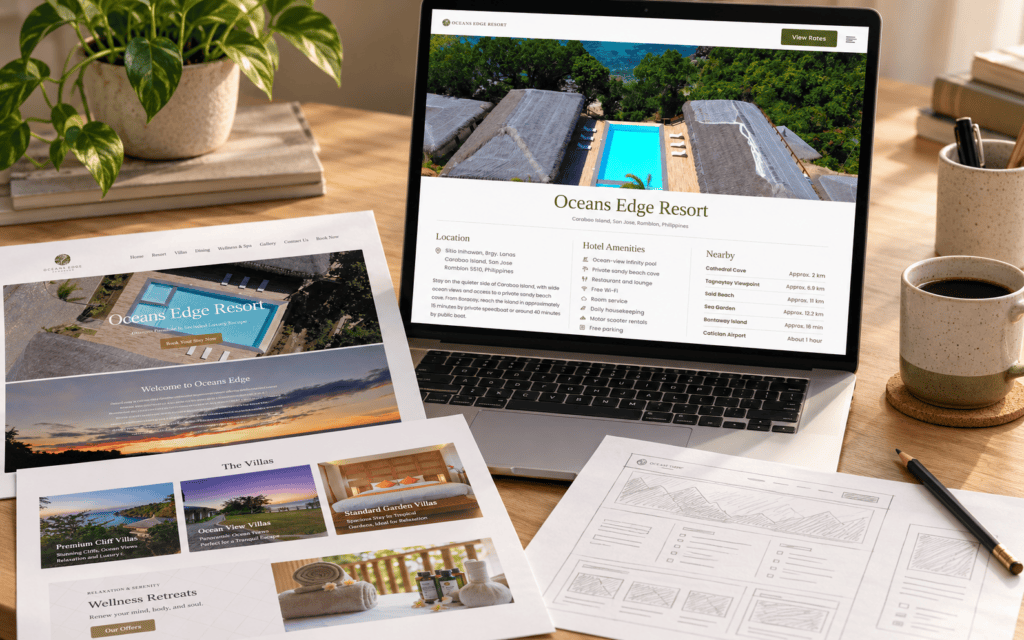
Oceans Edge Resort offers a quieter island getaway on Carabao Island in San Jose, Romblon, with sea-facing villas, an infinity pool, and sunset views.
OLWC managed the resort’s Meta advertising from June 5 to July 31, 2026, introducing that experience to prospective guests and giving them clear ways to inquire or explore direct booking options.
The work also included refreshing supporting social content and reviewing booking-engine activity, helping us understand what happened as guests moved beyond the advertising click.
Project Challenges
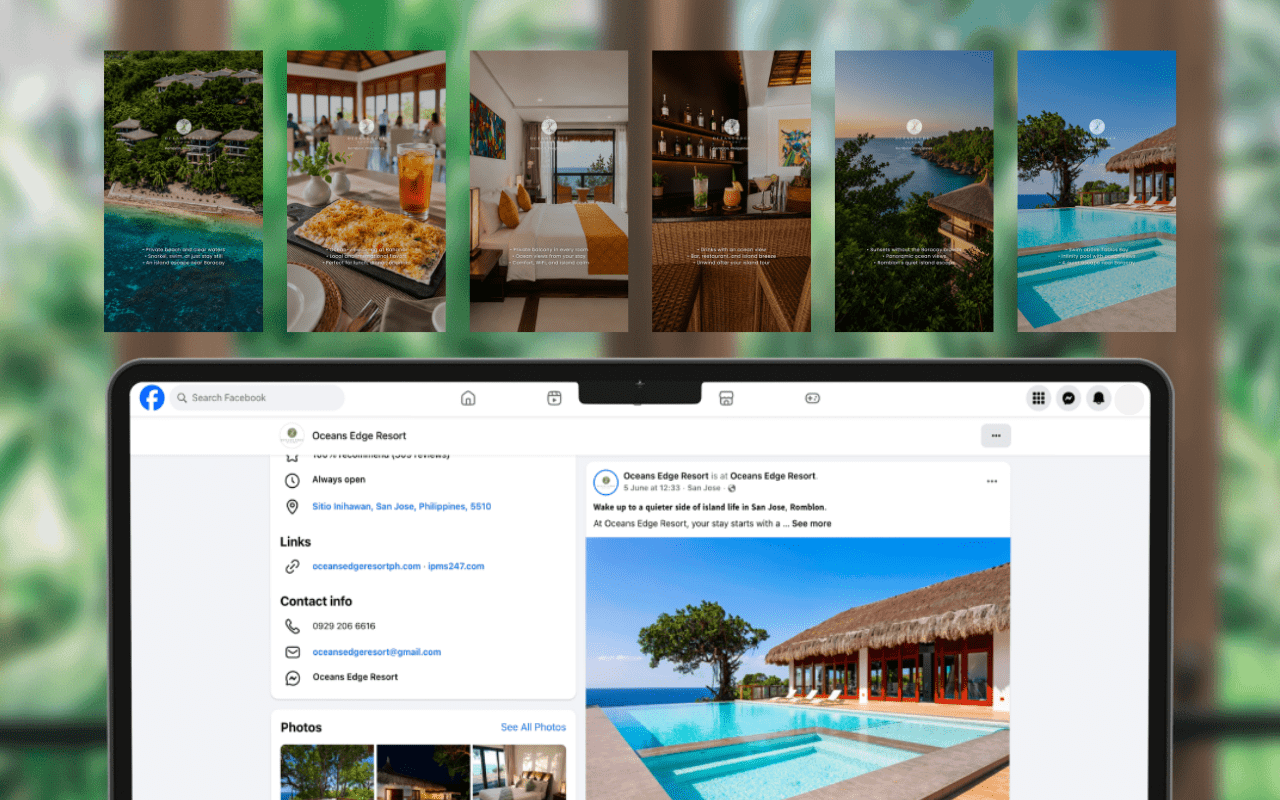
The resort’s photographs gave us strong material to work with, however most of it were thumbnails or low-resolution.
Guests also needed different kinds of assistance. Some wanted to ask about the island, accommodation, or travel arrangements through Messenger. Others were ready to check available rates online.
Older Facebook posts introduced another consideration. Rates were displayed in the social media posts that could differ from the current rates in the booking engine. The advertising needed supporting content that kept those next steps clear.
Project Objectives
Our goal was to bring more prospective guests into Oceans Edge Resort’s direct inquiry and reservation channels.
We focused on presenting the resort experience clearly, giving interested guests a suitable next step, and reviewing booking activity alongside advertising performance.
That approach connected the campaign with the practical work of helping guests plan a stay.
Our Approach
1. Reimagining Existing Photos for Different Ad Placements
The project began with a limited selection of client-provided photographs, some at a lower resolution than needed for larger advertising placements.
Drawing on OLWC developer’s multimedia background, we found ways to give those existing assets more uses. We upscaled selected photographs, reconsidered their framing, and developed layouts suited to different screen sizes and placements across Facebook and Instagram.
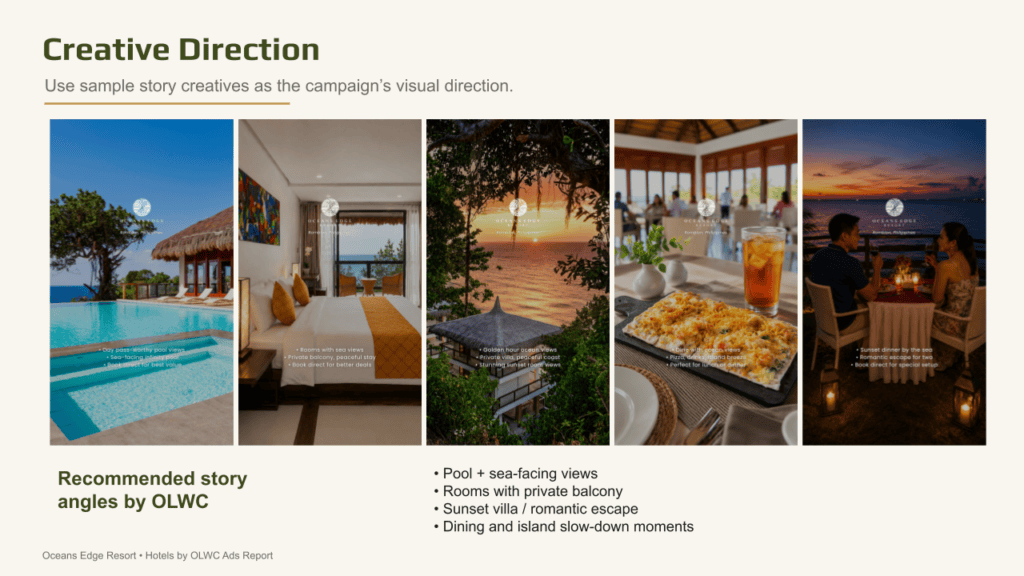
This involved considering how each image would work in a feed, a vertical story, or a smaller thumbnail. Cropping and text placement helped bring attention to the relevant part of the experience, whether the pool, accommodation, or a sunset dinner.
For promotional creatives, we gave the offer and booking prompt a clear visual priority. The layout needed to communicate the promotion quickly, including when someone encountered it as a small thumbnail.
“The offer needed to be clear at a glance, even in a small thumbnail.”
Alongside those promotional layouts, we shaped experience-focused creatives around the resort’s sea views, private balconies, and quieter island setting. This gave us different ways to introduce Oceans Edge Resort, using the available photography with a purpose for each placement.
2. Supporting Both Inquiries and Online Booking
Guests do not all reach a booking decision at the same pace.
Someone discovering Carabao Island for the first time may need help understanding the location or travel arrangements. Another guest may already know the destination and want to check accommodation immediately.
The campaign included a Messenger inquiry phase from June 5 to July 4, followed by a direct promotional landing-page phase from July 9 to July 31.
These routes gave interested guests different ways to continue. Messenger supported questions that needed a conversation, while the online path allowed visitors to explore further at their own pace.
The inquiries also helped us understand which information mattered to prospective guests, providing useful context for the resort’s wider website and content work.
3. Keeping Social Content Consistent With Current Offers
Supporting the campaign meant considering what guests would find after visiting the resort’s Facebook page.
Older promotional posts displayed fixed prices that could create uncertainty when compared with current booking-engine rates.
OLWC refreshed the organic feed at no additional charge, beyond the paid advertising scope. Fresh content brought attention back to the resort’s accommodation and island setting, encouraging guests to check current offers.
We also reviewed audience responses to the pool, room, and sunset content. These provided useful feedback on stories worth developing further.
The aim was to create a more consistent experience between discovering an ad, browsing the resort’s page, and deciding how to inquire or book.
4. Reviewing Activity Beyond the Click
Advertising results showed how people interacted with the campaign. Booking-engine records provided a separate view of activity further along the reservation journey.
We compared June 5–July 4, 2026 with the preceding period of May 5–June 4, 2026.
The comparison recorded:
- +900% in booking-engine activity.
- +700% in unconfirmed booking inquiries.
- +950% in room nights associated with confirmed bookings and unconfirmed inquiries.
- +676% in potential gross booking value.
The report also recorded new confirmed website bookings during the campaign period.
Average daily rate showed a −26% change across the same combined booking-and-inquiry dataset, providing additional context alongside the increase in activity.
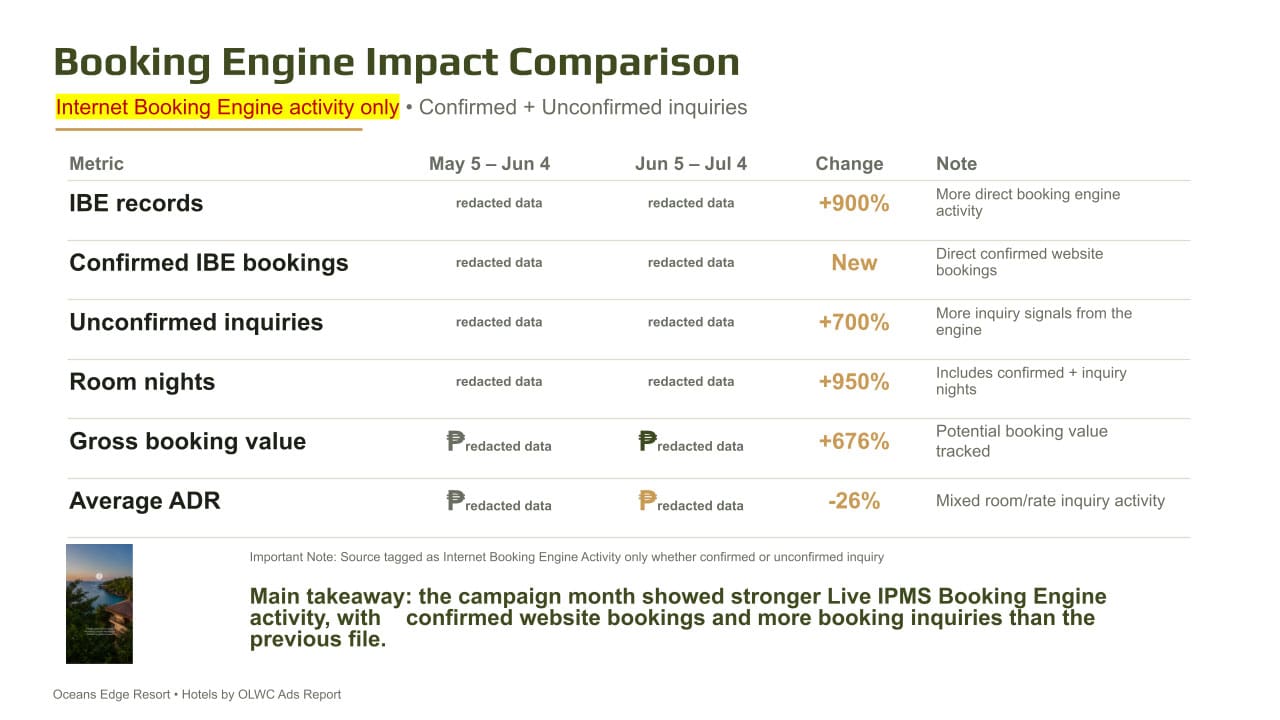
“A clearer picture comes from reviewing advertising traffic alongside inquiries and confirmed reservation activity.”
The Outcome
Across the full June 5–July 31, 2026 campaign period, Meta advertising recorded:
- 10k+ link clicks
- 90k+ people reached
- 139k+ impressions
These rounded totals show the scale of the campaign’s traffic and visibility.
The first-month comparison also showed +900% growth in recorded booking-engine activity, alongside new confirmed website reservations.
In the separate booking-source report, direct and owned sources accounted for approximately 53% of confirmed revenue, compared with approximately 47% from OTAs. Direct and owned sources included PMS, Internet Booking Engine, and Walk-in records.
These source shares describe reservations recorded during the reporting period and do not establish that every reservation resulted from Meta advertising.
For Oceans Edge Resort, the work connected experience-focused advertising with clearer social content and practical inquiry and booking options.
The campaign also provided useful feedback for future work: which resort experiences attracted attention, what prospective guests wanted to know, and how booking-engine activity developed during the reporting period.
“We were surprised by the volume of inquiries we received through Facebook Messenger.”